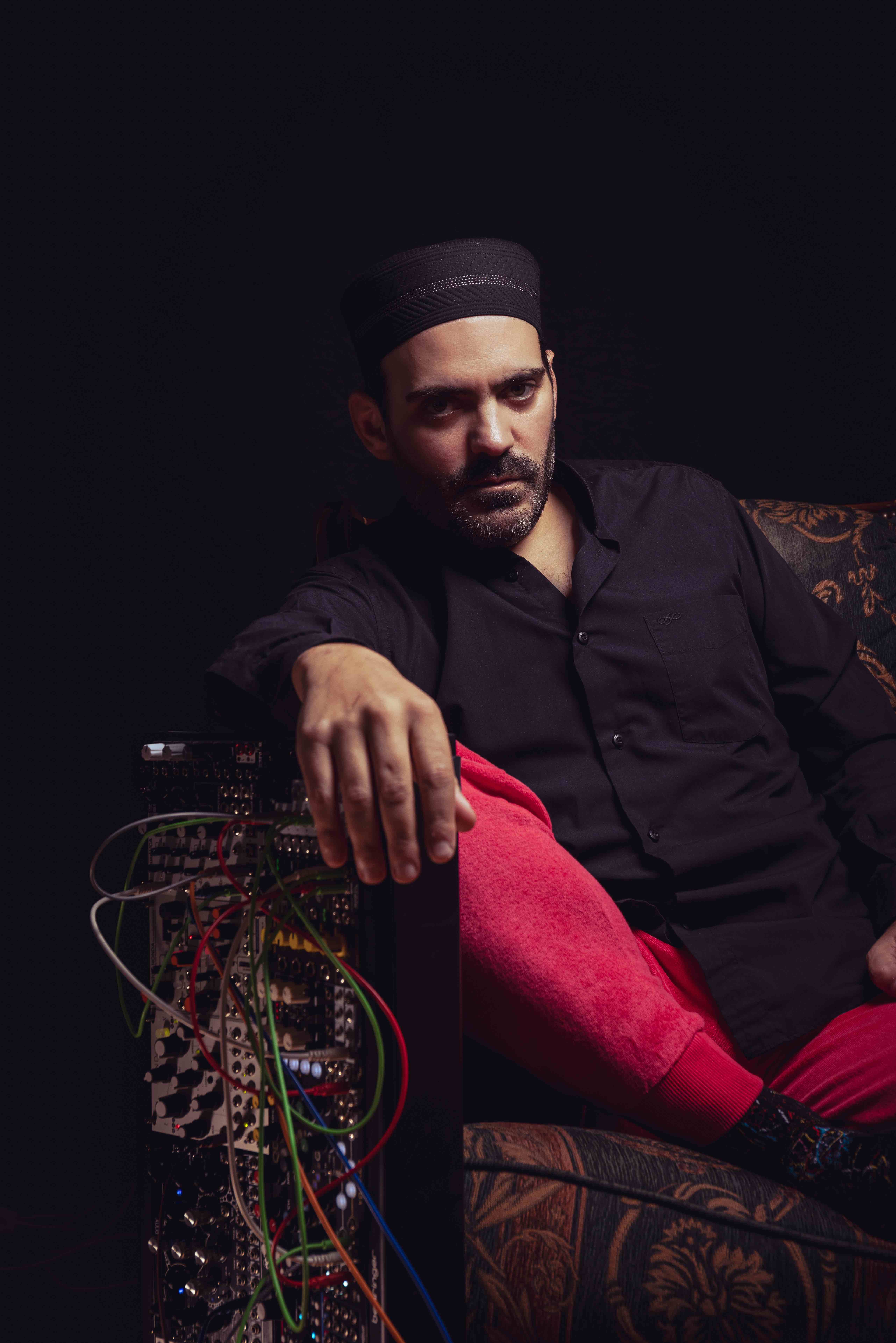
 Blaise Ubaldini is a composer, performer, and researcher whose work moves between contemporary music, theater, electronics, poetry, and philosophical inquiry. His music explores freedom, emotion, cultural identity, and the fragile spaces between sound, voice, body, memory, and transcendence.
He is currently pursuing a doctorate at USC as a Fulbright scholar, where his research connects artistic practice with philosophy, sociology, neuroscience, and education. In collaboration with the Brain and Creativity Institute , he develops new forms of musical material and investigates how culture shapes emotional perception.
His artistic journey has been marked by collaborations with musicians and performers from highly diverse backgrounds, ranging from contemporary classical music to jazz, electronic music, theater, spoken word, and traditional musical practices. Through these encounters, he seeks to create artistic spaces where multiple forms of expression, identities, and emotional experiences can coexist freely.
In 2014, he composed Bérénice, a work premiered at IRCAM in Paris with the soloists of the Ensemble intercontemporain . Blending theater and music into a single dramaturgical space, the piece marked an important step in his exploration of hybrid artistic forms.
In 2016, he composed Love Song for a Long-term Hatred together with Israeli trombonist Alon Stoler and the Iranian percussion ensemble the Chémirani Trio. The project explored the capacity of music to preserve human connection beyond political, cultural, and geographical divisions.
His debut album, Sunbathing , released in 2022, gathers five works for solo instruments and electronics written over a period of ten years. The album already reveals his attraction toward porous artistic territories, suspended emotional states, and the coexistence of intimacy and abstraction.
In 2023, he composed Rusty Song for violinist Patricia Kopatchinskaja and the Ensemble intercontemporain . Conceived as a musical space with multiple entry points, the work reflects his desire to create forms that remain open to listeners from different backgrounds and experiences.
More recently, he composed the music for Hamlet/Fantômes, directed by Kirill Serebrennikov at the Théâtre du Châtelet in Paris, in collaboration with the Ensemble intercontemporain and conductor Pierre Bleuse. The production further deepened his exploration of theater, fragmentation, memory, and the coexistence of musical and dramatic languages.
His latest album, In Between , expands these explorations through a musical world where string quartet, voice, drums, electronics, poetry, and noise interact continuously. Influenced by Sufi mysticism, the album unfolds as a meditation on unstable identities, emotional ambiguity, and the search for inner freedom.
Across both his artistic and academic work, Blaise Ubaldini approaches art as a space of existential exploration — a place where sound can reveal invisible connections between individuals, cultures, memories, and emotions.